

Dark spots are one of the most common skin concerns treated by dermatology providers. While they are usually harmless, many people choose treatment for cosmetic reasons — and because dark spots can be slow to fade on their own.1
There are a few different types of dark spots, including melasma, hyperpigmentation and sun spots. While these conditions can differ in their causes, they all appear as darker patches of skin caused by an overproduction of melanin.
If you have dark spots and want to correct the issue, learning more about treatment options will help you choose the right approach.
Key Takeaways
There are many prescription treatment options for dark spots.
Choosing the right type depends on your skin type, the type of dark spot you have, your tolerance for the medicine and the advice of a medical professional.
No matter what approach you take with treatment, sunscreen with at least SPF 50 is essential for long-term success.
What are popular prescription serums and creams for dark spots?
There are a variety of different options available. A RedBox Rx medical provider will help you determine the best course of treatment for your skin type and condition.
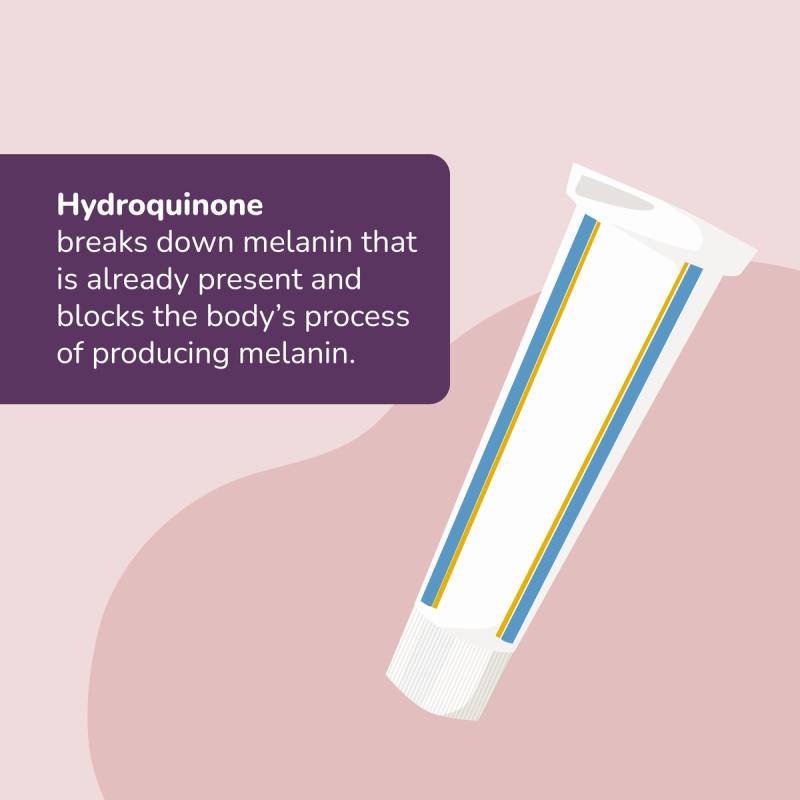
Hydroquinone
Medication class: Topical depigmenting agent.2
How it works: Hydroquinone blocks the body’s process of producing melanin, the substance that creates dark pigment in the skin from sun exposure. It also helps break down melanin that is already present. With less melanin, dark spots on the skin are reduced.3
Forms/strengths: Hydroquinone topical is available as a topical cream in 2% and 4% concentrations, and as a topical emulsion at 4%, 6% and 8% strength.4 RedBox Rx offers prescriptions for hydroquinone 4% cream.
Cost:The average cost of hydroquinone 4% without insurance is $123.79 for one 28.35 g tube.5 RedBox Rx offers hydroquinone 4% at $25 for an online consult, then $20 per month for one 28.35 g tube (a three-month supply).
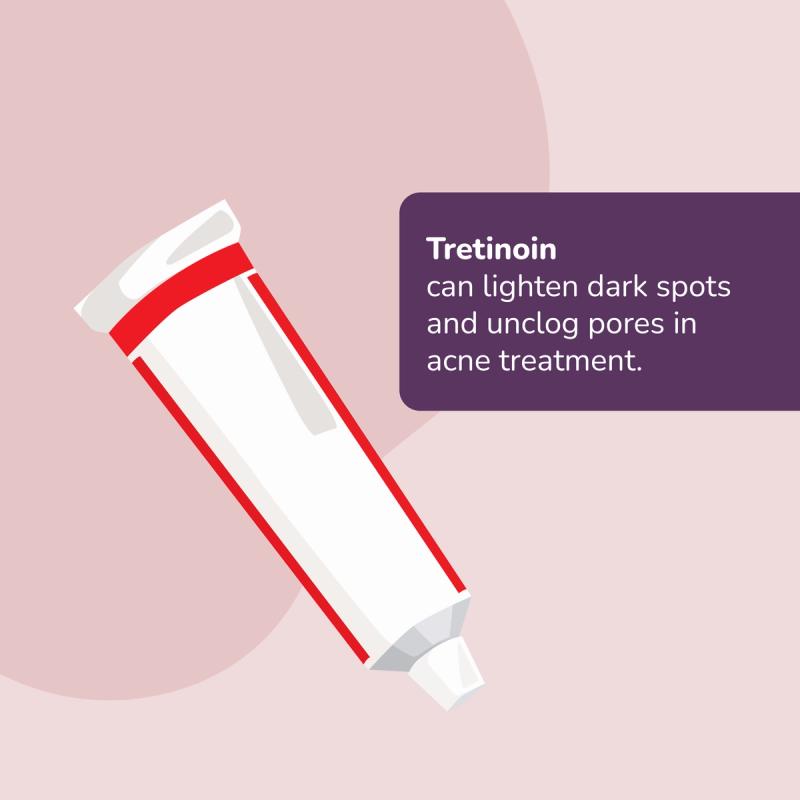
Tretinoin
Medication class: Retinoid.6
How it works: Tretinoin can lighten dark spots by increasing how quickly the body sheds affected skin cells and grows new skin cells.7 It is also used to help unclog pores in acne treatment.8
Forms/strengths: Tretinoin cream is available in 0.025%, 0.05% and 0.1% strengths. Tretinoin gel is available in various strengths, ranging from 0.01% to 0.1% concentrations.9 RedBox Rx offers prescriptions for tretinoin cream at 0.025%, 0.05% and 0.1% strengths, and tretinoin gel at 0.01% and 0.025%.
Cost: The average cost of tretinoin .05% without insurance is $123 for a 45 g tube.10 RedBox Rx offers tretinoin at $25 for an online consult, then $20 per month for a 45 g (three-month) supply of tretinoin cream, or $33.33 per month for a three-month supply of tretinoin gel.
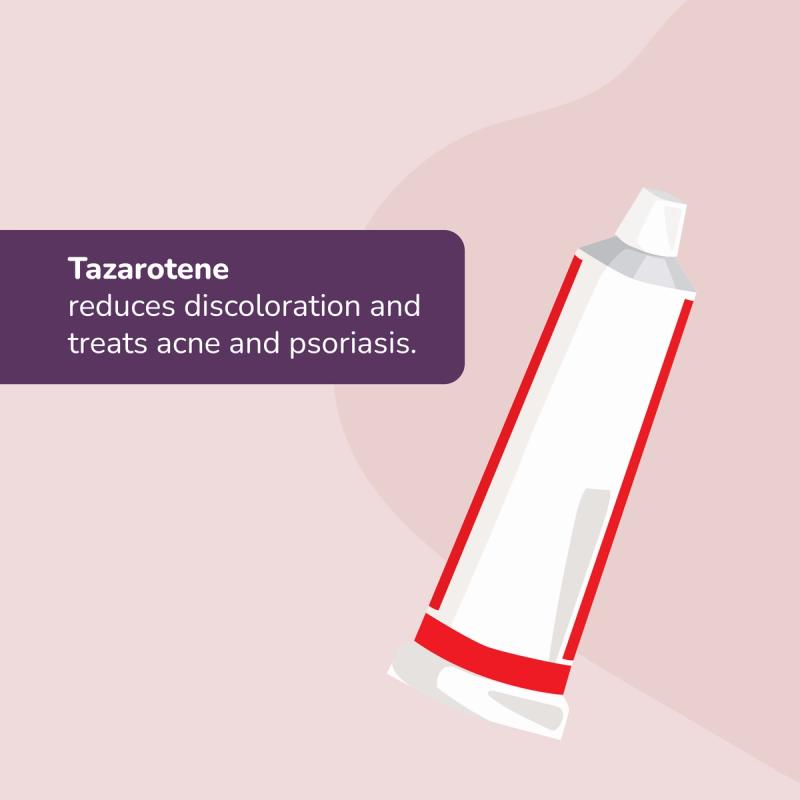
Tazarotene
Medication class: Retinoid.11
How it works: Tazarotene reduces discoloration by causing an increase in the thickness of the outer skin layers. It is also used to treat acne and psoriasis.12
Forms/strengths: Tazarotene can be used as a cream, gel, lotion or foam in 0.05% and 0.1% strengths.13 RedBox Rx offers prescriptions for tazarotene 0.1% cream.
Cost: The average cost for generic tazarotene topical without insurance is around $150 for a 30 g tube.14 Tazarotene 0.1% cream is available at RedBox Rx at $25 for an online consult and $75 for 30 g tube (a 45-day supply).
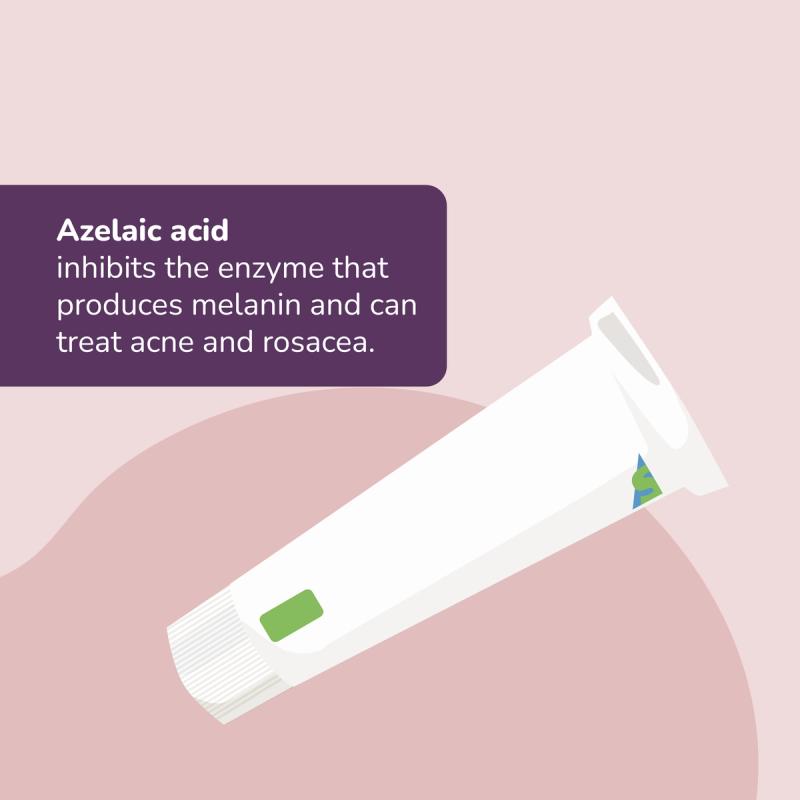
Azelaic Acid
Medication class: Dicarboxylic acids.15
How it works: It inhibits tyrosinase, an enzyme used in the production of melanin, to help reduce dark spots over time.16,17 It can also be used to treat acne and rosacea.
Forms/strengths: Prescription azelaic acid is a gel available at 15% and 20% strength.18 RedBox Rx offers azelaic acid 15% gel.
Cost: The average cost for azelaic acid 15% gel without insurance is $106 for 50 g.19 RedBox Rx offers treatment at $25 for an online consult, then $20 per month for 50 g (a three-month supply).
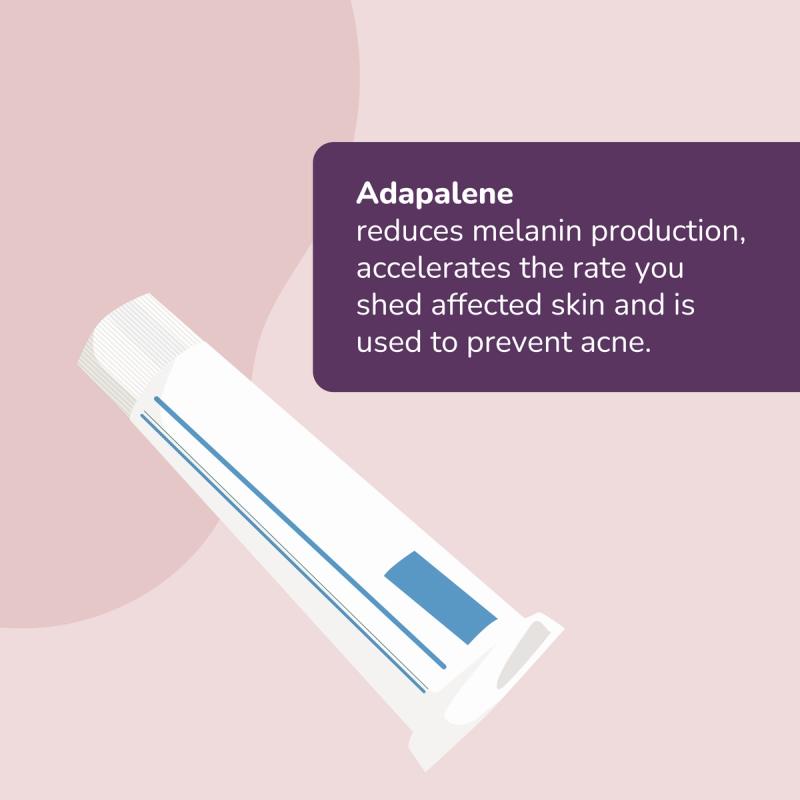
Adapalene
Medication class: Retinoid-like compound.20
How it works: It treats dark spots by reducing melanin production and by accelerating the rate you shed affected skin and grow new skin cells.21 Adapalene is also used to prevent acne by stopping pimples from forming under the surface of the skin.22
Forms/strengths: Adapalene is available as a topical cream or lotion at 0.1% concentration, and as a gel at 0.1% or 0.3% strengths.23 RedBox Rx offers prescriptions for adapalene 0.3% gel.
Cost: The average cost for adapalene 0.3% gel without insurance can range from $57-$99 for a 45 g tube.24 RedBox Rx offers adapalene gel treatment at $25 for an online consult, then $20 per month for a 45 g tube (a three-month supply).
What is the difference between over-the-counter and prescription dark spot correctors?
In general, prescription dark‑spot treatments are stronger, work faster when used properly and are strictly reviewed and regulated by the FDA.
Over-the-counter dark spot correctors are lower strength, but some may still be effective. An over-the-counter product is also less rigorously reviewed by the FDA.25
No matter which option you choose, dark spot correctors may interact with other skincare products, so check with your dermatology provider before changing your routine.
How effective are prescription topicals for dark spots?
Many studies over the years have demonstrated how useful prescription topicals can be for the treatment of dark spots.
| Treatment Type | Study Results |
|---|---|
Hydroquinone |
70% of users reported a reduction in pigmentation after using hydroquinone twice per day for three months.26 |
Tretinoin |
72% of participants reported improvement of hyperpigmentation after 24 weeks of tretinoin use.27 |
Tazarotene |
87% saw improvement in hyperpigmentation after 24 weeks of tazarotene use.28 |
Azelaic Acid |
Two-thirds of participants had no hyperpigmentation after 16 weeks of azelaic acid use. Nearly half of study participants reported only 1% to 10% of beginning hyperpigmentation left at the end of the trial.29 |
Adapalene |
59% of adapalene 0.3% gel users reported lightening of their sun damage.30 |
How fast will I see results using prescription dark spot correctors?
The time to see results can vary greatly depending on your personal skin type and adherence to the prescribed treatment plan.
| Treatment Type | Expected Timeline |
|---|---|
Hydroquinone |
Improvement occurs over several weeks to months.31 |
Tretinoin |
Visible results can be seen within 12 weeks but may take as long as six months.32 |
Tazarotene |
Results can be seen within 24 weeks but may be seen earlier.33 |
Azelaic Acid |
Visible lightening of dark spots with azelaic acid within 12–24 weeks.34 |
Adapalene |
Most people begin to see results after 8-12 weeks.35 |
How do side effects compare for prescription dark spot correctors?
Hydroquinone, tretinoin, tazarotene, azelaic acid and adapalene share similar side effects. These are typically mild and include:
Change in skin color.
Mild skin irritation, redness or dryness.
Sensitivity to light (tazarotene and adapalene only).
In rare cases, patients may experience more severe symptoms that require immediate medical attention:
Allergic reactions such as skin rash, itching, hives, swelling of the face, lips, tongue or throat.
Burning, itching, crusting or peeling of treated skin.
Wheezing or trouble breathing (azelaic acid only).
This list may not describe all possible side effects. Be sure to consult a medical professional if you have concerns about symptoms or your reaction to the medication.36,37,38,39,40
Where on your face and body can prescription dark spot correctors be used?
Dark spot correctors are commonly used on the face and neck area because they are most often exposed to the sun. But these treatments can also be used on the hands, arms, legs and other areas of the skin with hyperpigmentation.41 Dark spot correctors should not be used near your eyes, mouth or areas of sensitive skin.42
Can any prescription dark spot creams and serums be used together?
Yes, combination treatments have become more common over the years.43 Combining medications may increase effectiveness or reduce overall time for treatment, but it can also increase your risk for skin irritation or side effects.
Common combinations include:
Hydroquinone and tretinoin work together to make treatment more effective.44,45
Azelaic acid and retinoids can be combined to treat dark spots and underlying acne, but they should not be applied at the same time.46
Vitamin C and tretinoin are effective together, with vitamin C used in the morning and tretinoin at night.
There are also product combinations that should not be used together. For instance, using hydroquinone alongside benzoyl peroxide can cause irritation, dryness and skin staining.47
With so many different over-the-counter and prescription options, it’s important to consult a medical professional to determine the best skincare products and course of treatment for you.
How do I choose the best dark spot treatment?
To begin treatment, you must determine the answer to several questions, including:
What type of dark spot do I have? (melasma, sunspot or other hyperpigmentation)
What skin type do I have? (dry, oily, sensitive)
When do I want to see results?
Will my skin be able to tolerate retinoids or other strong ingredients?
A visit with a medical provider, including an online consult through RedBox Rx, can help you answer these and other questions. You should also contact a medical provider immediately if your skin is red, hot to the touch, itchy, painful or oozing.48
Common mistakes to avoid when starting dark spot treatment
It is important to use skin medication as prescribed and to take precaution with your skin during treatment. Common mistakes when treating dark spots include:49,50,51
Using prescription products too long or too frequently.
Using too many products and/or products that are incompatible.
Using makeup or other unrelated products with ingredients that may irritate your skin.
Stopping treatment too soon, or not addressing underlying conditions (such as acne).
Using tanning beds or leaving your skin uncovered outdoors.
Forgetting to apply sunscreen with SPF 50 daily — and every two hours if you’re spending time outside.
When treating dark spots, it’s important to understand that results will not happen overnight. You should also make a list of all medications you’re currently on and share it with your medical provider in case any of them can cause dark sports or interfere with your prescribed dark spot treatment.
How RedBox Rx can help
RedBox Rx makes receiving prescription treatments for hyperpigmentation, melasma and sun spots convenient and affordable.
Benefits of RedBox Rx include:
Transparent, affordable, flat rates for medications starting at $20/month.
$25 consultation with a U.S. licensed medical professional.
No insurance required. HSA and FSA eligible.
No office wait times or scheduling issues typical with physical medical practices.
FREE shipping directly to you. One-time, monthly and quarterly subscriptions available.
Get started on your journey toward better skin with our online assessment for melasma or anti-aging.