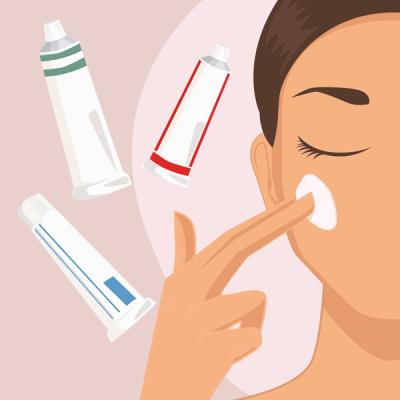
Tretinoin is a topical prescription medication used to treat skin conditions, including acne, signs of aging and melasma. The active ingredient, tretinoin, is a naturally occurring form of vitamin A that supports the body’s skin cell renewal process. Tretinoin is most widely available in topical forms like cream and gel.1,2
For those struggling with acne or unwanted signs of aging on the skin, tretinoin could be a topical solution for your needs. If you are still weighing your options, our guide to prescription anti-aging creams and serums compares tretinoin with other treatments side by side.
Key Takeaways
Tretinoin cream and gel contain the same active ingredient but with different bases.
Cream is water-based and hydrating, while gel is alcohol-based and lightweight.
Tretinoin cream is gentler for normal-to-dry or mature skin, and it’s offered in a wider range of strengths (up to 0.1%).
Tretinoin gel absorbs quickly, suits oily or acne-prone skin, and can feel less greasy.
Both forms are equally effective, and the best choice for each person is typically determined by skin type.
What is tretinoin?
Tretinoin is a topical retinoid, which is a type of medication made from vitamin A. Its active ingredient is a form of vitamin A called retinoic acid. When you apply it to your skin, it speeds up how quickly your skin generates new cells. This helps unclog pores, smooth rough texture and fade dark spots over time.
The U.S. Food and Drug Administration (FDA) first approved tretinoin in 1971 to treat acne. In 1995, it was also approved to treat visible signs of aging from sun exposure, such as fine wrinkles and uneven skin tone.3 Today, common tretinoin uses include acne, signs of aging and melasma, along with improving overall skin texture.
If you are curious how tretinoin compares to retinol and other retinoids, our guide to tretinoin, retinol and retinoids explains the difference.
How it Works
Tretinoin works by speeding up your skin's natural renewal process.4 It prompts your skin to shed old, damaged cells and replace them with new ones. Over time, this helps clear clogged pores, even out skin tone and support the skin's collagen. Because the same active ingredient is at work, tretinoin cream and gel function similarly.
Effectiveness for Anti-Aging and Dark Spots
In multiple clinical studies, topical tretinoin was proven to reduce signs of aging, especially damage caused by the sun.5 With regular use, it can soften fine lines, smooth rough texture and fade dark spots.
Effectiveness for Acne
Tretinoin is also a proven acne treatment. In clinical studies, participants saw up to a 45% reduction in visible acne after 12 weeks of use.6
Forms
Tretinoin comes in a few different topical forms. The two most common are cream and gel. It is also available as a lotion or a microsphere gel, which releases the medication more slowly to be gentler on the skin.7 Cream and gel are the forms you will see most often, so the rest of this guide will focus on how those forms compare.
What is tretinoin cream?
Best for
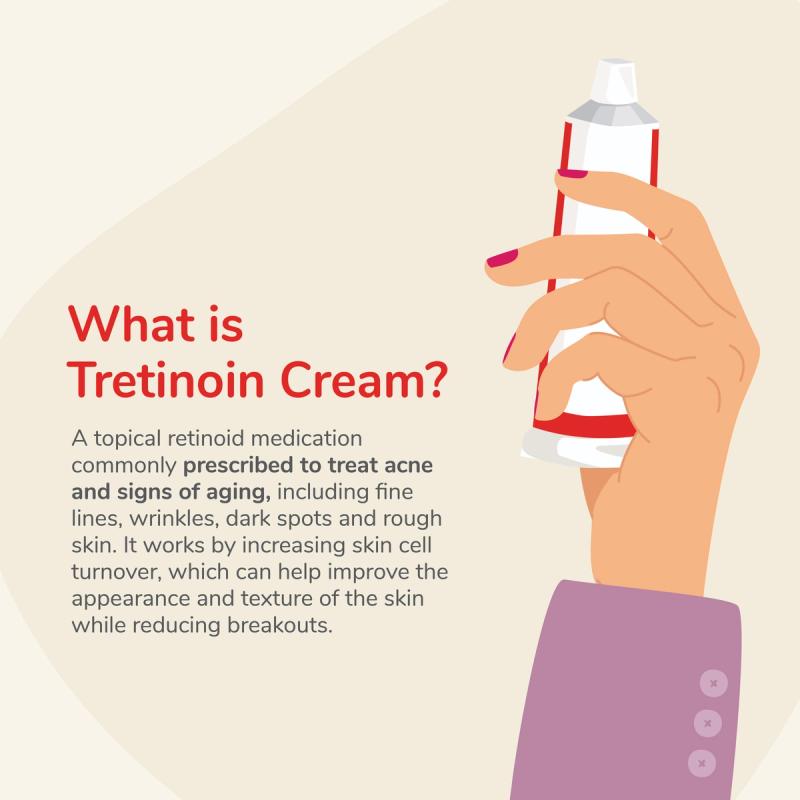
Tretinoin cream is commonly prescribed to treat signs of aging, including fine lines, wrinkles, dark spots, and rough skin.
For acne, tretinoin cream can reduce the number and severity of pimples. It also promotes faster healing of pimples that have already formed.8 In studies, participants saw up to 52% improvement in visible acne after 12 weeks of use.9
Strengths/Concentrations Available
Tretinoin cream comes in three main strengths:
0.025%
0.05%
0.1%
Most people start at the lowest strength, 0.025%, so their skin can adjust with less irritation. If your skin tolerates it well, your provider may move you up to a higher strength over time.10
Higher is not always better, so the right strength depends on your skin and your goals. For a closer look, see our guide to tretinoin strengths and dosing.
Common Brand Names
Common brand names of tretinoin cream include:11
Avita®
Refissa®
Renova®
Tretin-X
Cost and Availability
Tretinoin cream can cost between $40 to $180 without insurance.12 Through RedBox Rx, it is $20 per month for a 45 g tube (a three-month supply) after a $25 online consult. Standard shipping is free.
Tretinoin prescriptions online for less.
Get tretinoin cream starting at $20 per month with a $25 online consult. No membership fees, free shipping.
Get StartedWhat is tretinoin gel?
Best for
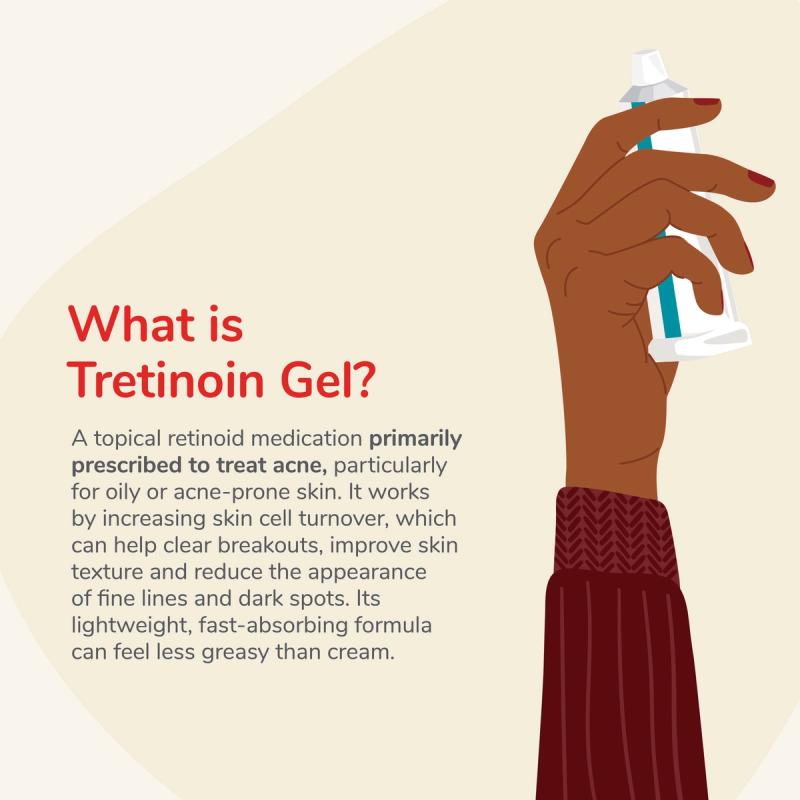
Tretinoin gel is a topical prescription medication used to treat acne and signs of aging.13 It is alcohol-based and lightweight, so it tends to suit oily or acne-prone skin. Gel absorbs quickly and can feel less greasy, which is why many people with oilier skin prefer it. It can be more drying than cream, so it may not be the best pick for very dry or sensitive skin.
Strengths/Concentrations Available
Tretinoin gel comes in two main strengths:
0.01%
0.025%
As with cream, it is best to start low. Many people begin at 0.01% and move up to 0.025% once their skin adjusts, with guidance from their provider.14
Common Brand Names
Common brands of tretinoin gel include:15
Atralin®
AVITA®
Retin-A®
Retin-A Micro®
Tretin-X®
Cost and Availability
Like the cream, tretinoin gel is available by prescription only and comes in a lower-cost generic. Without insurance, tretinoin gel costs can range from $40 to over $200.16 Through RedBox Rx, gel prescriptions start at $33.33 per month, with a $25 consultation and free shipping.
What’s the difference between tretinoin cream and gel?
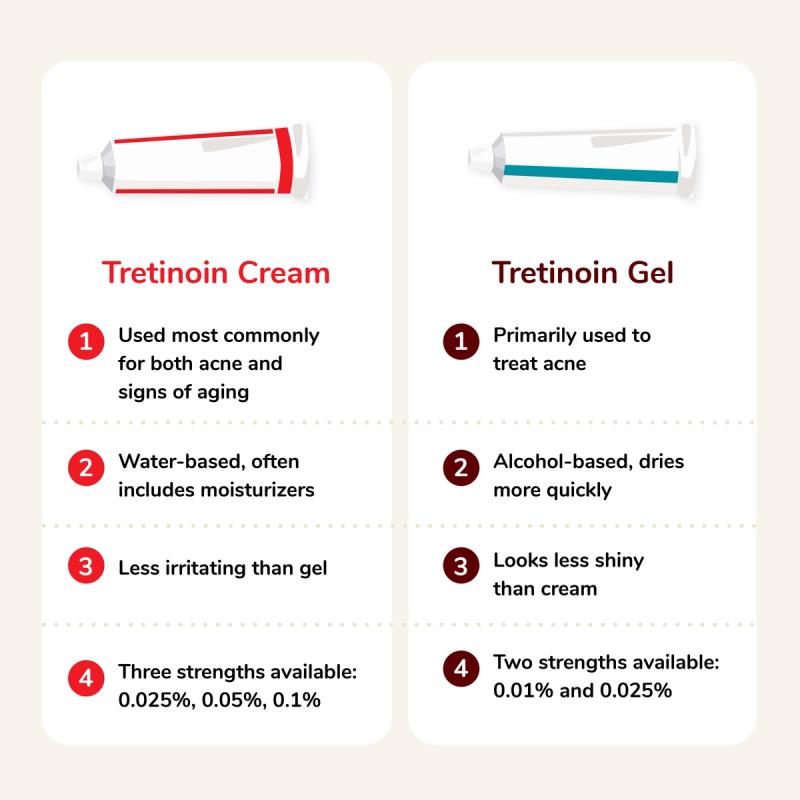
Tretinoin cream and gel share the same active ingredient, so they work in similar ways. The main differences come down to the base, the strengths available and the skin types they suit best.
Base and Formulation
Tretinoin cream is water-based and often includes moisturizers, which makes it more hydrating and gentler. Tretinoin gel is alcohol-based, so it is lighter and dries quickly.
Strength and Dosing
Tretinoin cream comes in a wider range of strengths, up to 0.1%. Gel is available in 0.01% and 0.025%. For both forms, the usual dose is a pea-size amount applied to the affected skin once a day before bed.17 Whichever form you use, it is best to start at a lower strength and build up slowly. Our full guide to tretinoin strengths and dosing walks through how to choose.
Best for Skin Type
Cream tends to work best for normal to dry or mature skin because of its added moisture. Gel tends to suit oily or acne-prone skin because it is lightweight and less likely to look shiny. If your skin is sensitive, cream is often the easier place to start.
Absorption and Texture
Gel absorbs quickly and can feel less greasy, which some people prefer. Cream absorbs more slowly and leaves skin feeling more hydrated. Neither is better overall. It comes down to how each one feels on your skin.
Cost
Each is available as a lower-cost generic, and brand-name versions cost more. Through RedBox Rx, tretinoin gel costs $33.33 per month for a 45 g tube (three-month supply), and tretinoin cream is $20 per month for a 45 g tube (three-month supply).
What are the side effects of tretinoin?
Side effects of tretinoin are generally mild and well tolerated by most users. As your body and skin adjust, side effects will likely disappear. Common side effects include:18
Redness of the skin
Burning, itching or stinging
Chapping or slight peeling of the skin
Darkening or lightening of the skin color
Unusual skin dryness or warmness
It is also common for skin to look worse before it gets better while it adjusts. Our guide to the tretinoin purge and acne flare explains what to expect.
Contact your medical provider if any symptoms become severe or continue for a long time.
If tretinoin side effects are a concern, here is how it compares to other retinoids: bakuchiol vs. retinol vs. tretinoin, tazarotene (Tazorac) vs. tretinoin and adapalene (Differin) vs. tretinoin.
How to choose between tretinoin cream and tretinoin gel
The right tretinoin cream or gel comes down to your skin and what you want to treat. A few things to consider:
Skin type: Cream suits normal to dry or mature skin. Gel suits oily or acne-prone skin.
Oily vs. dry: If your skin gets shiny or oily, gel may feel better. If it runs dry, cream adds moisture.
Sensitivity: Cream is usually gentler and easier to start with if your skin is sensitive.
Acne vs. anti-aging: Both treat acne, but cream is more often used for signs of aging.
According to Dr. Fick, the chief medical officer for RedBox Rx’s parent company, Hy-Vee, “Patients often debate cream or gel. But with tretinoin, consistency matters more than formulation.” His advice: “Whichever option you choose, use it exactly as prescribed by your doctor and pair it with a daily sunscreen.”
When you are ready to begin using tretinoin, our step-by-step guide to using tretinoin shows you how.
How RedBox Rx can help

RedBox Rx makes receiving treatment for acne, anti-aging or melasma (dark spots) easy and affordable.
Benefits of RedBox Rx include:
Tretinoin prescriptions starting at $20 per month.
$25 consultation with a U.S. licensed medical provider.
No insurance required. HSA and FSA eligible.
No office wait times or scheduling issues typical with physical medical practices.
FREE shipping directly to you.
One-time, monthly and quarterly subscriptions available.
Get started on your journey toward better skin with our online assessment for acne or anti-aging.