How To Get Paroxetine

73%
of patients saw improved symptoms, with a total remission rate of 56% after 12 weeks of paroxetine use.
Source: Psychiatrist.com
Sorry, we’re closed for today. Our U.S. licensed medical providers are available daily 7 a.m. to 9 p.m. CST via live video visit. We look forward to serving you soon. Email us anytime at [email protected].
Paroxetine (Generic Paxil®) FAQs
-
Paroxetine tablets are used to treat depression, panic disorder (sudden, unexpected attacks of extreme fear and worry about these attacks), and social anxiety disorder (extreme fear of interacting with others or performing in front of others that interferes with normal life). Paroxetine tablets and suspension are also used to treat obsessive-compulsive disorder (bothersome thoughts that won't go away and the need to perform certain actions over and over), generalized anxiety disorder (GAD; excessive worrying that is difficult to control) and post-traumatic stress disorder (disturbing psychological symptoms that develop after a frightening experience). Paroxetine is in a class of medications called selective serotonin-reuptake inhibitors (SSRIs). It treats depression and other mental illnesses by increasing the amount of serotonin, a natural substance in the brain that helps maintain mental balance.
At a lower dose (7.5 mg), paroxetine is also used to treat premenstrual dysphoric disorder (PMDD, physical and psychological symptoms that occur before the onset of the menstrual period each month), hot flashes (sudden feelings of warmth, especially in the face, neck and chest) in women who are experiencing menopause (stage of life when menstrual periods become less frequent and stop, and women may experience other symptoms and body changes).
Paroxetine is also sometimes used to treat chronic headaches, tingling, pain or numbness in the hands and feet caused by diabetes, and certain male sexual problems. Paroxetine is also used with other medications to treat bipolar disorder (mood that changes from depressed to abnormally excited). Talk to your doctor about the possible risks of using this drug for your condition.1
-
Paroxetine comes as a tablet to take by mouth. The tablet is usually taken once daily in the morning or evening, with or without food. Take paroxetine around the same time every day. Follow the directions on your prescription label carefully, and ask your doctor or pharmacist to explain any part you do not understand. Take paroxetine exactly as directed. Do not take more or less of it or take it more often than prescribed by your doctor.2
-
Paroxetine is a selective serotonin reuptake inhibitor (SSRI) and works by increasing the levels of serotonin in the brain to help regulate mood.3
-
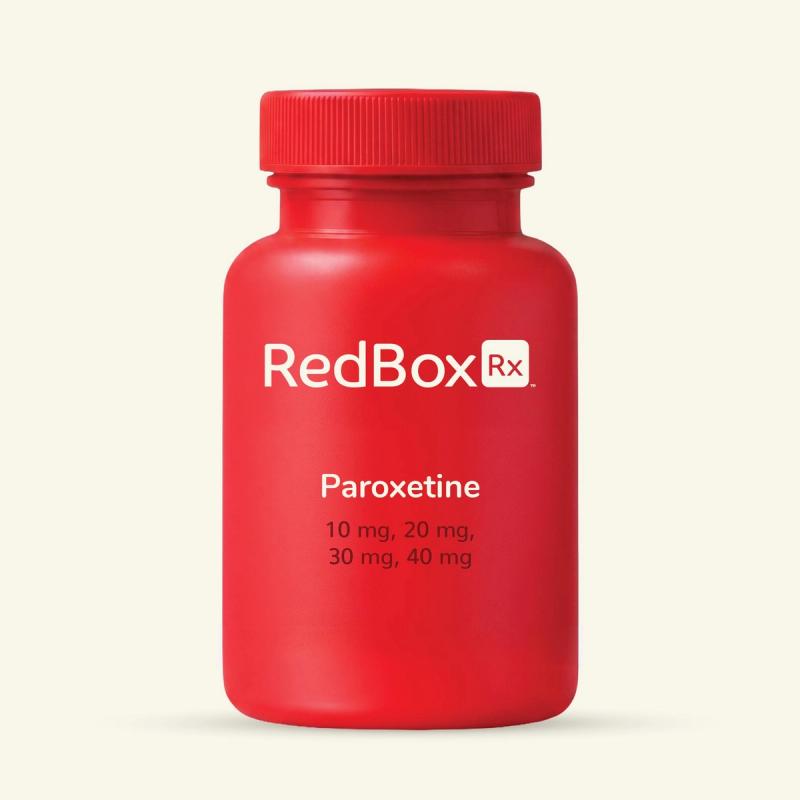
RedBox Rx prescribes paroxetine in dosages of 10 mg, 20 mg, 30 mg and 40 mg. Our U.S. licensed medical professionals can help determine the right dosing of paroxetine, if prescribed. Start an online consult for anxiety and depression to discuss your options.
-
It can take four to six weeks for paroxetine to take full effect.4
-
Paroxetine has a half-life of 21 to 24 hours and stays in your system for up to five days after taking it.5
-
Paroxetine can be taken in the morning or at night. It is best to take it at the same time each day.6
-
No. Paroxetine requires a prescription, but it is not classified as a controlled substance.7
-
Paroxetine is $25 per month with purchase of a three-month supply from RedBox Rx, no insurance required and no membership fees. We’re able to offer low prices because we purchase paroxetine directly from manufacturers and ship from our pharmacy in Iowa.
Our online consultation for anxiety and depression costs only $35.
-
Paroxetine requires a prescription.8 Start an online visit for anxiety and depression with a U.S. licensed medical professional at RedBox Rx to see if paroxetine is right for you.
-
Yes. Check the expiration date on the bottle’s label and always properly dispose of unused expired medication.
-
Drinking alcohol while taking paroxetine may interfere with the medication and cause additional side effects. Discuss the risks with your doctor if you plan to drink alcohol while taking the medication.9
-
Paroxetine may cause side effects. Tell your doctor if any of these symptoms are severe or do not go away:
Dizziness
Weakness
Shaking of a part of the body that you cannot control
Trouble falling asleep or staying asleep
Nervousness
Nausea, diarrhea, constipation
Decreased appetite
Sexual problems in males (decreased sex drive, inability to get or keep an erection, or delayed or absent ejaculation)
Sexual problems in females (decreased sex drive, or delayed orgasm or unable to have an orgasm)
Dry mouth
Sweating
Yawning
Some side effects can be serious. If you experience any of the following symptoms or those listed in the IMPORTANT WARNING or SPECIAL PRECAUTIONS sections, call your doctor immediately or get emergency medical treatment:
Fever
Chest pain
Seizures
Agitation
Sweating
Headache
Weakness
Hoarseness
Hallucinations
Loss of coordination
Rash, itching or hives
Fast or irregular heartbeat
Peeling or blistering of skin
Tightness in hands and feet
Nausea, vomiting or diarrhea
Abnormal bleeding or bruising
Cramping, bloating or swelling
Severe muscle stiffness or twitching
Shortness of breath, dizziness or fainting
Confusion or problems with thinking, concentration or memory
Swelling of the face, throat, tongue, lips, eyes, hands, feet, ankles or lower legs
Paroxetine may cause other side effects. Call your doctor if you have any unusual problems while taking this medication.
If you experience a serious side effect, you or your doctor may send a report to the Food and Drug Administration's (FDA) MedWatch Adverse Event Reporting program online (http://www.fda.gov/Safety/MedWatch) or by phone (1-800-332-1088).10
-
Yes, paroxetine does cause weight gain in some patients. In most cases this gain is minor and can be counteracted with a healthy diet and exercise.11
-
Before taking paroxetine (generic Paxil®):12
Tell your doctor or pharmacist if you are allergic to this drug, any part of this drug or any other drugs, foods or substances. Tell your doctor or pharmacist about the allergy and what symptoms you had.
Tell your doctor or pharmacist if you are taking the following medications or have stopped taking them within the past two weeks: monoamine oxidase (MAO) inhibitors, including isocarboxazid, linezolid, methylene blue, phenelzine, selegiline and tranylcypromine.
Know that some medications should not be taken with paroxetine. Other medications may cause dosing changes or extra monitoring when taken with paroxetine. Make sure you have discussed any medications you are currently taking or plan to take before starting paroxetine with your doctor and pharmacist. Before starting, stopping or changing any medications while taking paroxetine, please get the advice of your doctor or pharmacist.
Know that the following nonprescription or herbal products may interact with paroxetine: St. John's wort; tryptophan; dextromethorphan; aspirin and nonsteroidal anti-inflammatory drugs (NSAIDS) such as ibuprofen and naproxen. Be sure to let your doctor and pharmacist know that you are taking these medications before you start taking paroxetine. Do not start any of these medications while taking paroxetine without discussing with your healthcare provider.
Tell your doctor if you use or have ever used street drugs or have overused prescription medications, or if you have recently had a heart attack. Also tell your doctor if you have or have ever had seizures; bleeding problems; bone problems, including osteoporosis (a condition in which the bones become thin and weak, and break easily) or bone fractures; or liver, kidney or heart disease.
Tell your doctor if you are pregnant, if you plan to become pregnant or if you are breastfeeding. If you become pregnant while taking paroxetine, call your doctor immediately.
Know that paroxetine may make you drowsy and affect your judgment and thinking. Do not drive a car or operate machinery until you know how this medication affects you.
Ask your doctor about the safe use of alcoholic beverages while you are taking paroxetine. Alcohol can make the side effects of paroxetine worse.
Know that paroxetine may cause angle-closure glaucoma (a condition where the fluid is suddenly blocked and unable to flow out of the eye, causing a quick, severe increase in eye pressure, which may lead to a loss of vision). Talk to your doctor about having an eye examination before you start taking this medication. If you have nausea, eye pain, changes in vision, such as seeing colored rings around lights, and swelling or redness in or around the eye, call your doctor or get emergency medical treatment right away.
-
Unless your doctor tells you otherwise, continue your normal diet.13
-
Take the missed dose as soon as you remember it. However, if it is almost time for the next dose, skip the missed dose and continue your regular dosing schedule. Do not take a double dose to make up for a missed one.14
-
Do not stop taking paroxetine without talking to a medical professional. Withdrawal symptoms will be less if you taper off paroxetine according to your medical professional’s advice. Stopping paroxetine abruptly may result in withdrawal symptoms, including agitation; breathing problems; chest pain; confusion; diarrhea; dizziness or lightheadedness; fast heartbeat; headache; increased sweating; muscle pain; nausea; restlessness; runny nose; trouble sleeping, trembling or shaking; unusual tiredness or weakness; vision changes or vomiting.15
-
Paxil withdrawal symptoms often start within two to three days and can last up to six weeks or longer.16
-
Keep this medication in the container it came in, tightly closed and out of reach of children. Store it at room temperature and away from excess heat and moisture (not in the bathroom).
It is important to keep all medication out of sight and reach of children, as many containers (such as weekly pill minders and those for eye drops, creams, patches, and inhalers) are not child-resistant and young children can open them easily. To protect young children from poisoning, always lock safety caps and immediately place the medication in a safe location, out of their sight and reach. Learn more at http://www.upandaway.org.
Unneeded medications should be disposed of in special ways to ensure that pets, children, and other people cannot consume them. However, you should not flush this medication down the toilet. Instead, the best way to dispose of your medication is through a medicine take-back program. Talk to your pharmacist or contact your local garbage/recycling department to learn about take-back programs in your community. See the FDA's Safe Disposal of Medicines website (http://goo.gl/c4Rm4p) for more information if you do not have access to a take-back program.17
-
In case of overdose, call the poison control helpline at 1-800-222-1222. Information is also available online at https://www.poisonhelp.org/help. If the victim has collapsed, had a seizure, has trouble breathing or can't be awakened, immediately call emergency services at 911.
Symptoms of overdose may include the following:
Coma
Seizures
Fever
Sweating
Confusion
Fast or irregular heartbeat
Severe muscle stiffness or twitching18
-
Keep all appointments with your doctor.
Before having any laboratory test (especially those that involve methylene blue), tell your doctor and the laboratory personnel that you are taking paroxetine.
Do not let anyone else take your medication. Ask your pharmacist any questions you have about refilling your prescription.
It is important for you to keep a written list of all of the prescription and nonprescription (over-the-counter) medicines you are taking, as well as any products such as vitamins, minerals or other dietary supplements. You should bring this list with you each time you visit a doctor or if you are admitted to a hospital. It is also important information to carry with you in case of emergencies.19
-
Paroxetine is the generic version of the following brand names:20
Paxil®
Paxil® CR
Brisdelle® (for treatment of hot flashes)
Pexeva® (no longer available)
-
We offer a variety of prescription medication options for anxiety and depression, including:
-
We offer a variety of prescription medication options for depression, including:
-
We offer a variety of prescription medication options for anxiety, including:
-
Medications such as paroxetine may increase the risk of suicidal thoughts and actions. This increase was found in children, teenagers and young adults (less than 24 years of age). The risk may be more likely with the first few months of treatment and when the dose is increased.
Call your doctor right away if you experience any of the following symptoms: new or worsening depression; thinking about harming or killing yourself, or planning or trying to do so; extreme worry; agitation; panic attacks; difficulty falling asleep or staying asleep; aggressive behavior; irritability; acting without thinking; severe restlessness; and frenzied abnormal excitement. Be sure that your family or caregiver knows which symptoms may be serious so they can call the doctor if you are unable to do so.
The doctor or pharmacist will give you the Medication Guide. Read the information carefully and ask your doctor or pharmacist if you have any questions.
Talk to your doctor about the risks of taking paroxetine.21
RedBox Rx Reviews
-
“
RedBox Rx has made mental healthcare accessible and affordable. Without it, I truly don’t know where I’d be. I have severe anxiety, but with three kids and a full time job seeking out care is very difficult. I have tried other sites who are either ridiculously expensive or simply won’t service me. With RedBox Rx I can explain my problems, meet with a provider, and have medication on the way in under an hour. Phenomenal service. -Madyson R.
-
“
Been using RedBox Rx consistently for anxiety, depression, and ADHD medications. They’ve always been very reliable and always work with me. I’ll continue to be a returning customer! -Dravin S.
-
“
So much appreciate the ease of scheduling and doing a consultation on a Saturday morning. My prescription was given for 90 days as requested with medication arriving in the next days. Looking forward to being back on an even keel, especially before the holidays. -Kris

Affordable anxiety and depression treatment online.
Your mental health matters. RedBox Rx offers convenient online care with licensed providers and prescription treatment. Get the support you need, all on your schedule.
- Low-cost $35 telehealth consult.
- Paroxetine starting at $25 per month (with purchase of three-month supply).
- No membership fees.
- HSA & FSA eligible.
- Free standard shipping or expedited/overnight available.
Sorry, we’re closed for today. Our U.S. licensed medical providers are available daily 7 a.m. to 9 p.m. CST via live video visit. We look forward to serving you soon. Email us anytime at [email protected].