How to Get Oral Minoxidil
Compare Oral Minoxidil Prescription Prices
See how we stack up against competitors on oral minoxidil costs. RedBox Rx offers transparent, low prices on hair loss medications — plus a free online consultation for men’s hair loss or women’s hair loss with one of our licensed dermatology providers.
| Provider | Price |
|---|---|
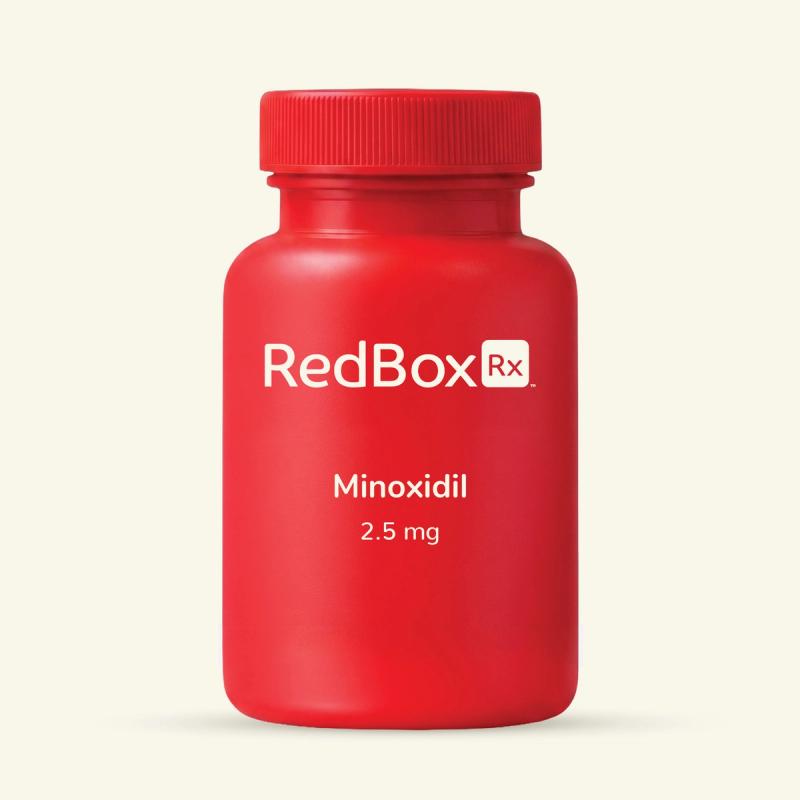
RedBox Rx — Oral Minoxidil 2.5 mg |
$15/mo (three-month supply: $45) |
Happy Head® — Oral Minoxidil 1.25 mg |
$16/mo (three-month supply: $48) |
Keeps® — Oral Minoxidil |
$30/mo (three-month supply: $90) |
Musely® — The Hair Pill (compounded w/minoxidil) |
$32/mo (three-month supply: $96) |
Ro® — Oral Minoxidil 2.5 mg |
$30/mo (three-month supply: $90) |

63.4%
of patients experienced clinical improvement in hair loss after six months of low-dose oral minoxidil treatment.
Source: National Library of Medicine
Sorry, we’re closed for today. Our U.S. licensed medical providers are available daily 7 a.m. to 9 p.m. CST via live video visit. We look forward to serving you soon. Email us anytime at [email protected].
Oral Minoxidil for Hair Loss FAQs
-
Oral minoxidil is prescribed to treat male-pattern hair loss and female-pattern hair loss. It is also used to treat high blood pressure.
In low doses, oral minoxidil is well-tolerated and effective at treating hair loss. It can be particularly helpful for individuals who do not tolerate topical minoxidil well or those who want to pair oral minoxidil with a different topical hair loss treatment.1 Low-dose oral minoxidil has also shown promise for other types of hair loss, including chronic telogen effluvium (excessive hair shedding) and alopecia areata.2
-
Minoxidil works by relaxing the blood vessels so blood can flow more easily through the body. Research on why it is effective is ongoing, but it appears this increased blood flow delivers more oxygen to hair follicles to stimulate growth.3
-
Oral minoxidil comes as a tablet to take by mouth. It usually is taken once or twice a day. Follow the directions on your prescription label carefully, and ask your doctor or pharmacist to explain any part you do not understand. Take minoxidil exactly as directed. Do not take more or less of it or take it more often than prescribed by your doctor.4
-
Hair regrowth from oral minoxidil can take six to eight months, as hair regrows slowly. However, some hair shedding may take place two to six weeks after starting treatment, and this is a sign the medication is working.5
-
Yes. Studies show low-dose oral minoxidil is a safe and effective treatment for both male-pattern and female-pattern hair loss. Men are typically prescribed higher doses.6
-
Oral minoxidil dosing is up to 5 mg per day for males and up to 2.5 mg per day for females.7
-
Minoxidil is available only with a prescription from a licensed medical provider.8 You can purchase from a pharmacy or an online pharmacy like RedBox Rx.
-
With RedBox Rx, you can get oral minoxidil for as low as $15 per month, no insurance required and no membership fees. We are able to offer low prices because we purchase minoxidil directly from manufacturers and ship from our pharmacy in Iowa.
Our online consultation for men’s hair loss or women’s hair loss is free.
-
There is no single best time of day to take oral minoxidil. However, you should take it at the same time each day.9
-
Oral minoxidil and finasteride treat men’s hair loss in different ways. Finasteride blocks the conversion of testosterone into dihydrotestosterone (DHT), the hormone that shrinks hair follicles in male-pattern hair loss, while minoxidil stimulates hair follicles by improving blood flow to the scalp.10 Because minoxidil does not affect hormone levels, it may be a good option for men who experience, or want to avoid, the sexual side effects associated with finasteride. Finasteride is not approved for women’s hair loss. Learn more about finasteride.
-
Yes, oral minoxidil and finasteride are often prescribed together for men’s hair loss. Because the two medications work through different mechanisms, combining them can be more effective than either one alone.
In a 12-month study of more than 500 men taking low-dose oral minoxidil with finasteride, over 92% saw their hair loss stabilize or improve.11 RedBox Rx’s licensed healthcare providers can help determine whether adding finasteride to your treatment plan is right for you.
-
Like finasteride, dutasteride treats men’s hair loss hormonally, by blocking the enzyme that converts testosterone into DHT, while oral minoxidil works by stimulating blood flow to hair follicles. Dutasteride, like finasteride, also carries a similar risk of sexual side effects in men.12 Learn more about dutasteride.
-
Yes, oral minoxidil and dutasteride can be prescribed together for men’s hair loss. Because the two medications work through different mechanisms, pairing a DHT blocker like dutasteride with minoxidil can make hair loss treatment more effective.13 RedBox Rx’s licensed healthcare providers can help you weigh the benefits and potential side effects of combination treatment.
-
Oral minoxidil and spironolactone address women’s hair loss differently. Spironolactone is an anti-androgen that blocks the hormones that contribute to female-pattern hair loss, while oral minoxidil stimulates hair follicles by increasing blood flow to the scalp.14 Spironolactone is not prescribed to men. Learn more about spironolactone.
-
Yes. In a 12-month study of 100 women with female-pattern hair loss, once-daily treatment with low-dose oral minoxidil and spironolactone reduced hair shedding, improved hair density and was well tolerated.15 RedBox Rx’s licensed healthcare providers can determine whether combination therapy is right for you.
-
The main difference between oral minoxidil and minoxidil foam is how you use the medication. Oral minoxidil is a low-dose tablet that is taken orally on a daily basis. Minoxidil foam is a topical treatment applied to the skin in areas the user would like to regrow hair. The oral and topical forms of minoxidil also have different side effects.Oral minoxidil side effects include:16
Increase in size or darkness of fine body hair
Breast tenderness
Headache
Nausea
Vomiting
Topical minoxidil side effects include:17
Stinging and redness at the application site
Rash (rare)
To learn more about how the two forms compare, check out our blog post: Oral vs. Topical Minoxidil: How Do They Compare.
-
Oral and topical minoxidil deliver the same active ingredient in different ways, so they generally should not be used together. Combining the two increases your total minoxidil exposure, which can raise the risk of side effects such as unwanted body hair growth, dizziness and fluid retention. Research also suggests adding topical minoxidil to oral minoxidil provides little additional benefit.18 Do not combine the two forms unless your provider directs you to.
-
Before taking minoxidil:19
Tell your doctor and pharmacist if you are allergic to minoxidil, any other medications or any of the ingredients in minoxidil tablets. Ask your pharmacist for a list of the ingredients.
Tell your doctor and pharmacist what prescription and nonprescription medications, vitamins, nutritional supplements and herbal products you are taking or plan to take. Be sure to mention any of the following: diuretics (water pills), guanethidine and other medications for high blood pressure.
Tell your doctor if you have pheochromocytoma (adrenal gland tumor). Your doctor will probably tell you not to take minoxidil.
Tell your doctor if you have had a recent heart attack, or if you have heart or kidney disease.
Tell your doctor if you are pregnant, plan to become pregnant or are breastfeeding. If you become pregnant while taking minoxidil, call your doctor.
If you are having surgery, including dental surgery, tell the doctor or dentist that you are taking minoxidil.
You should know that this medication may make you drowsy. Do not drive a car or operate machinery until you know how it affects you.
Ask your doctor about the safe use of alcohol while you are taking minoxidil. Alcohol can make the side effects from minoxidil worse.
-
Your doctor may prescribe a low-salt or low-sodium diet. Follow these directions carefully.20
-
Take the missed dose as soon as you remember it. However, if it is almost time for the next dose, skip the missed dose and continue your regular dosing schedule. Do not take a double dose to make up for a missed one.21
-
Minoxidil may cause side effects. Tell your doctor if any of these symptoms are severe or do not go away:22
Increase in size or darkness of fine body hair
Breast tenderness
Headache
Nausea
Vomiting
Some side effects can be serious. If you experience any of the following symptoms, or those listed in the IMPORTANT WARNING section, call your doctor immediately:23
Rash
Fast heartbeat
Swollen ankles or feet
Unexplained weight gain
Difficulty breathing
Dizziness
Fainting
-
Because oral minoxidil circulates throughout the body, it can increase hair growth beyond the scalp. This side effect, called hypertrichosis, is the most common side effect of low-dose oral minoxidil and may appear as darker or thicker fine hair on the face, arms or body. It is dose-related, more common in women than men and reversible if the dose is lowered or the medication is stopped.24
-
Oral minoxidil is not known to cause weight loss, but it can cause the body to retain salt and water. This fluid retention may show up as swelling in the ankles or feet and as rapid weight gain. Weigh yourself daily while taking oral minoxidil, and call your doctor if you gain weight rapidly or notice swelling.25
-
No, sexual side effects are not expected with oral minoxidil. Unlike finasteride and dutasteride, minoxidil does not block DHT or alter hormone levels, so it is much less likely to cause side effects such as erectile dysfunction or decreased libido.26 If you notice sexual side effects while taking oral minoxidil, talk to your medical provider.
-
Oral minoxidil has a short half-life of about three to four hours, and most of a dose is cleared from the body within a day or two.27
-
After stopping treatment, the body will return to previous hair growth levels but may take a few months to return to baseline.28
-
Keep this medication in the container it comes in, tightly closed and out of reach of children. Store at room temperature and away from excess heat and moisture (not in the bathroom).
Unneeded medications should be disposed of in special ways to ensure that pets, children and other people cannot consume them. However, you should not flush this medication down the toilet. Instead, the best way to dispose of your medication is through a medicine take-back program. Talk to your pharmacist or contact your local garbage/recycling department to learn about take-back programs in your community. See the FDA's Safe Disposal of Medicines website for more information if you do not have access to a take-back program.
It is important to keep all medication out of sight and reach of children, as many containers (such as weekly pill minders and those for eye drops, creams, patches and inhalers) are not child-resistant and young children can open them easily. To protect young children from poisoning, always lock safety caps and immediately place the medication in a safe location, one that is out of their sight and reach. Learn more at http://www.upandaway.org.29
-
In case of overdose, call the poison control helpline at 1-800-222-1222. Information is also available online at https://www.poisonhelp.org/help. If the victim has collapsed, had a seizure, has trouble breathing or can't be awakened, immediately call emergency services at 911.30
-
Your doctor may ask you to check your pulse (heart rate) daily. Ask your doctor or pharmacist to teach you how to do this. Call your doctor if your heart rate increases by more than 20 beats per minute while at rest.
Weigh yourself every day. Call your doctor if you experience rapid weight gain.
Do not let anyone else take your medication. Ask your pharmacist any questions you have about refilling your prescription.
It is important for you to keep a written list of all the prescription and nonprescription (over the counter) medicines you are taking, as well as any products such as vitamins, minerals or other dietary supplements. You should bring this list with you each time you visit a doctor or if you are admitted to a hospital. It is also important information to carry with you in case of emergencies.31
-
Minoxidil was used under the brand name Loniten® but only to treat high blood pressure. This branded product is no longer on the market, but generic alternatives may be available. When prescribed for hair loss treatment, minoxidil is being used off-label, so there is no brand name version.32
-
We also prescribe the following medications for hair loss:
-
-
View our telehealth and online pharmacy FAQs here
RedBox Rx Reviews
-
“
“Great experience, fast and professional. Definitely recommended.” -Mario V.
-
“
“I loved the website! I've been taking the medication for two and a half months and I've already seen some results. I recommend it to those of you who are experiencing hair loss, it's really worth it.” -Fernandes
-
“
“After a visit to my dermatologist where my concerns were dismissed, my best friend told me about this site where she gets her treatments. Super easy and convenient! Provider reviewed and approved my treatment very fast and order is already on the way! Online providers listen to you more than in-person ones! Cost is reasonable and I can use my FSA which is a bonus! Definitely recommended!” -KCM
Affordable hair loss treatment online.
Backed by 750+ five-star Trustpilot reviews, RedBox Rx offers convenient online treatment for men's and women's hair loss. Our licensed dermatology providers make it simple to get a personalized prescription treatment plan — all from the comfort of home.
- Free telehealth consult.
- Oral minoxidil for $15 per month (with purchase of three-month supply).
- No membership fees.
- HSA & FSA eligible.
- Free standard shipping or expedited/overnight available.
Sorry, we’re closed for today. Our U.S. licensed medical providers are available daily 7 a.m. to 9 p.m. CST via live video visit. We look forward to serving you soon. Email us anytime at [email protected].